|
North Devon UNESCO Biosphere |
Latest News |
|
|
Welcome to the biosphere sidebar! |
|
The sidebar is always accessible for you to get in touch, start a conversation or connect with us via social media or our newsletter.
|

Sign our Nature Recovery Plan
|
Become a VIP!
|
|
North Devon UNESCO Biosphere |
Latest News |
|
How did you hear about our project?
Back in 2019, we attended a Taw Valley Farmers Group (TVFG) workshop on carbon capture and the environment mostly because we were interested in tree planting on a small scale. While there, we got talking with a few like-minded members and at the beginning of summer 2019, Jane Hart, TVFG coordinator had got a small interest group together with an FWAG consultant. This small group with expert support, expanded on the practical issues of planting trees and as a result, it gave us the encouragement to participate in this venture. With the support and guidance from Woods4Water and the North Devon UNESCO Biosphere, our proposal to plant a thousand native trees and three leaky woody dams was accepted. Tell us about how the tree planting project worked on your land. The leaky woody dams were built and in-place by August 2020. Planting started in late November till mid-December 2020 and by our second year, we had more than 80% of our planting showing good growth. The design for planting hard wood trees, followed a circular and hexagonal pattern. This pattern needed to take account of overall land area and distance between each sapling. Whilst, free planting of Wild Cherry, Bird Cherry, Crab Apple provided a more natural overall feel to the planting design. The woodland has a public footpath enjoyed by many of the local village residents, and in recognition of our regeneration planting the Parish Council with our consent has planted the Queen’s Jubilee tree there as well. That sounds amazing, how did you first become interested in regenerating native woodland in our UNESCO Biosphere? Historically, this area of land was actually woodland. In the 40’s and 50’s much of it was cleared for grazing. In early 2000, my late father began to explore the idea of regenerating the woodland and he started with planting a small area with a mixture of tree saplings. More recently, my husband and I, like many others, have seen how challenges in climate change and the environment have stood in the forefront of all our lives. For us, looking at the many environmental challenges provided a yearning for a legacy that contributes to the betterment of our environmental future, for our children and grandchildren. Since getting involved with the project, has this changed how you think about your land management? As farmers, we have always accepted the important link between trees and the environment. However, the Woods4Water project, involving leaky woody dams, planting trees and attending workshops, has meant we are now more informed and involved within the debate itself. Our leaky woody dams are doing their job, water from heavy rainfall has been held back and in some ways the dams are a part of flood risk management. Do you have any advice for others looking to get involved in tree planting and other land management projects? In the future, as the trees mature, we hope that the woodland provides a lasting riparian catchment to filter and maintain water quality. Planting the tree saplings was definitely a challenge but a challenge that we would do again and encourage others to do as well. At times, when unsure or in over our heads, we found support and help from the Woods4Water team has been exceptional. However, given what we know now, perhaps we could have visited other landowners who have undertaken such a project to better inform and prepare ourselves for the task of planting. At the forefront of planting is always the question of right tree right place. Which trees for shaded or loamy soil? Planting aftercare and maintenance of woodland is an issue that we are currently grappling with as is what and when to use weed control and also caring for trees at different stages of growth. For the coming years we can see continued interest in tree planting and environmental projects like installing leaky woody dams. As such, with the current age of social media, a Biosphere-led initiative for an interactive and current forum for likeminded interest in tree planting and maintenance would be greatly beneficial. Thanks so much for chatting to us West Hill Farm – your project sounds like it is having a positive effect on your land and, as a result, our whole environment. Thank you. Planting trees can bring a wealth of benefits to your land. It can present opportunities to diversify, generate additional income, increase productivity, and enhance your land – whilst also supporting wider environmental goals. The Devon Woods Project team of advisors offer a range of support and advice services to landowners, tenants, and communities including site visits, advising on the most suitable location and design for new woodland creation, accessing grant schemes such as the England Woodland Creation Offer (EWCO) and MORE woods, securing the necessary permits and consents, and registering new woodland with carbon credit accreditation schemes. If you are interested to find out more about the Devon Woods Project please contact devonwoods@devon.gov.uk
0 Comments
North Devon UNESCO Biosphere Launches Sustainable Tourism App for Visitors to Northern Devon! North Devon UNESCO Biosphere have launched a new web app aimed at visitors and residents, to highlight the fantastic experiences available in the area, while helping to reduce pressure on the popular hotspots. The North Devon Explorer web app will provide real time information on traffic congestion and weather and aims to help people find the hidden gems in and around our biosphere, spreading the visitor load and economy. The North Devon Explorer app will allow visitors to: • Discover the range of activities our biosphere has to offer, including natural and cultural highlights; walking and cycle trails; gardens, nature reserves and wildlife; museums and stately homes. • Find their nearest visitor information centre • View current weather information at their chosen destination • Check tide times at coastal points • Locate EV charging points across the area • Identify traffic congestion • View a range of hospitality related businesses certified by the North Devon Biosphere Business Partner Eco-Accreditation Scheme. The App also provides visitors with a guide through the towns across the area through reciprocal links to the dscvr app, launched by Torridge and North Devon Councils last year. Andy Bell, Biosphere Service Coordinator, North Devon UNESCO Biosphere says: “We have designed this app to help give visitors to northern Devon access to a range of experiences that will add to the quality of their stay in our area. With up-to-date weather and traffic information, they can avoid busy hot spots and get more enjoyment by connecting with our wonderful environment and culture” The project was developed and part funded under the Interreg Channel programme through the BioCultural Heritage Tourism Project co-ordinated by North Devon UNESCO Biosphere. This project’s aims were to demonstrate how tourism growth can be compatible with regions of very high environmental quality. “After months of work behind the scenes getting this app created, tested and refined, I’m delighted that we are now able to launch North Devon Explorer, just in time for the summer holidays! I urge all accommodation providers to mention the app to their guests in their pre arrival information or welcome packs, as an extra layer of service and to help us spread the visitor load this summer.” Sarah Jordan, North Devon Explorer Project Lead The project was also part funded by The Tarka Country Trust, in line with their objectives for the conservation of sites and education for all. To view the North Devon Explorer web app, visit www.northdevonexplorer.com The Biosphere Foundation, the non profit operational arm of the North Devon UNESCO Biosphere, has partnered up with Siemens in a three year deal to launch and globally scale the critical market infrastructure for nature based solutions to address climate change.
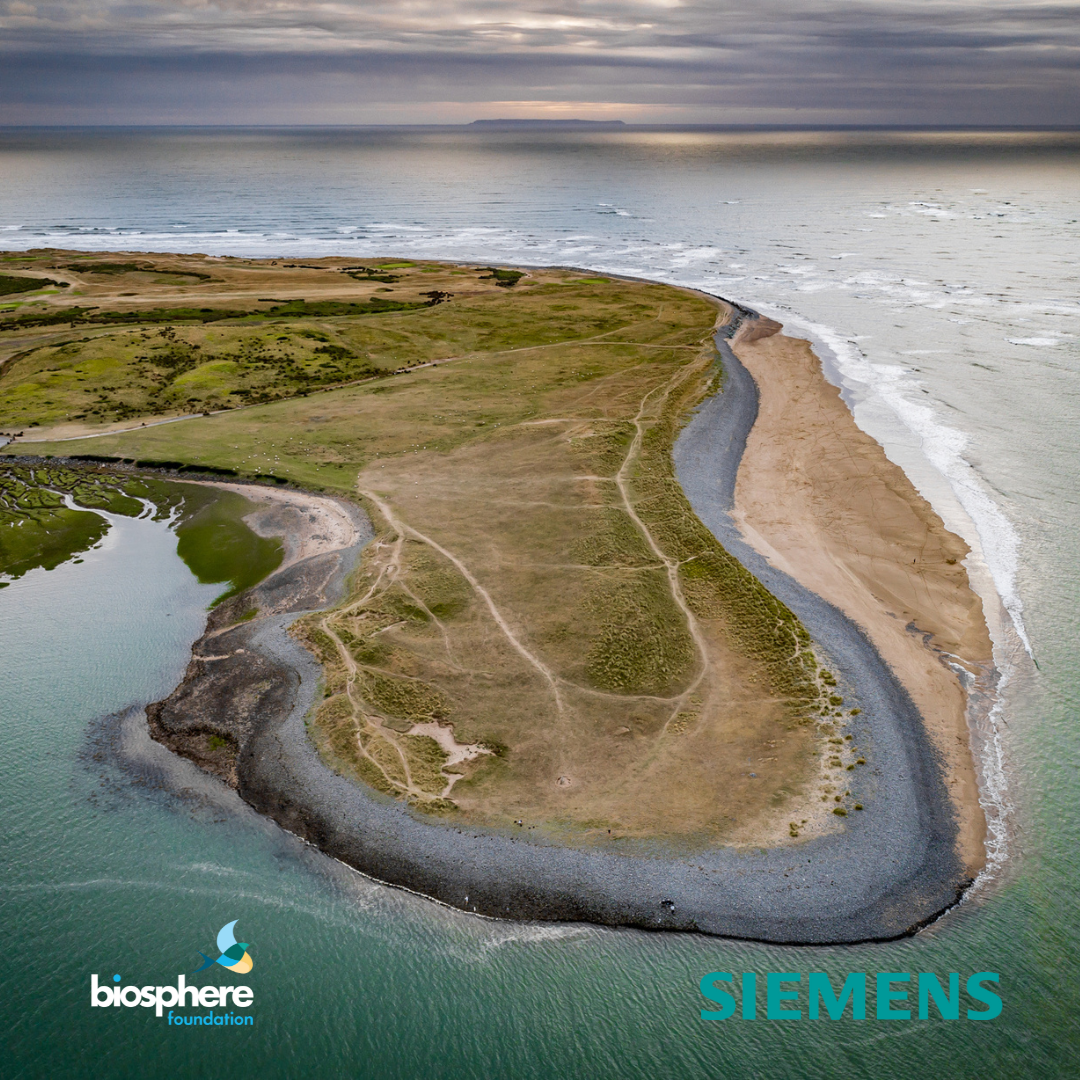
The sponsorship deal, worth over £528,000, will see the biosphere benefit from technology licenses, Siemens development and management input, and global marketing support to assist in scaling and roll out. This partnership has boosted two infrastructure platforms in the environment and climate markets: Natural Capital Marketplace and The Smart Biosphere. Natural Capital Marketplace is a as an online trading platform to provide the market infrastructure to connect landowners, investors and ecosystem service customers (such as Carbon credits and Biodiversity Net Gain Credits). NCM has been developed over two years with the backing from both the HM Government and the Environment Agency. The Smart Biosphere provides a scalable environmental intelligence platform to monitor, report and verify nature-based interventions. It brings together IoT sensors in the environment, big data, machine learning and earth observation. Both solutions are built on Mendix™, Siemens' industry leading, all-in-one, low-code application development platform to create a customer portal that enables local farmers, landowners, and carbon/biodiversity credit customers to purchase offsets online. Rob Passmore, Commercial Lead at the Biosphere Foundation, said: “Accelerating the rollout of nature-based interventions - such as tree planting and peatland restoration - are critical to addressing the 1.5°C climate challenge. To date, we believe the market has lacked the necessary infrastructure to redirect private investment at pace and scale into nature. The solutions we have created with Siemens directly address this challenge and represent a significant step forward for the sector.” A Smart Biosphere pilot project has already been trialled on a 5km river catchment in North Devon after 18 months of development with funding support from Heart of the South West LEP, South West Water and HM Government. Cutting edge technology enables data collection and analysis on the river catchment to build real-time information to find the relationships between the agricultural food system's land-use, soil health, run-off, water quality, natural flood management and flood risks. Alan Wardle from Siemens said “Siemens technology has significantly transformed the Biosphere Foundation by enabling us to accelerate time to market by 65% (Smart Biosphere) to 72% (NCM). Additionally, Biosphere Foundation had also benefitted from Siemens Industrial IOT Framework - MindSphere - which collects, secures and structured data from our physical environment and waters by using multiple sensors and various sources.” “We have had a strong partnership with Siemens over the past 3 years." Added Rob Passmore “Our alliance will only grow stronger as our two infrastructure platforms have the potential to drive real innovation and change for the rural and coastal communities, economies and environments across our nation.” What is next for the Biosphere Foundation? “In a word scaling! We are thrilled to have signed a strategic partnership with Siemens who supports our vision and ambition. Our focus now is on ramping up impacts by rolling out our nature-based solution infrastructure to new geographies.” Rob Passmore is a panellist today at Transform2022 on July 13 sharing the Biosphere Foundation’s experience in digital transformation on the main stage in the What’s next in tech? session. |
Search Blog by SDG
All
Archives
January 2026
|